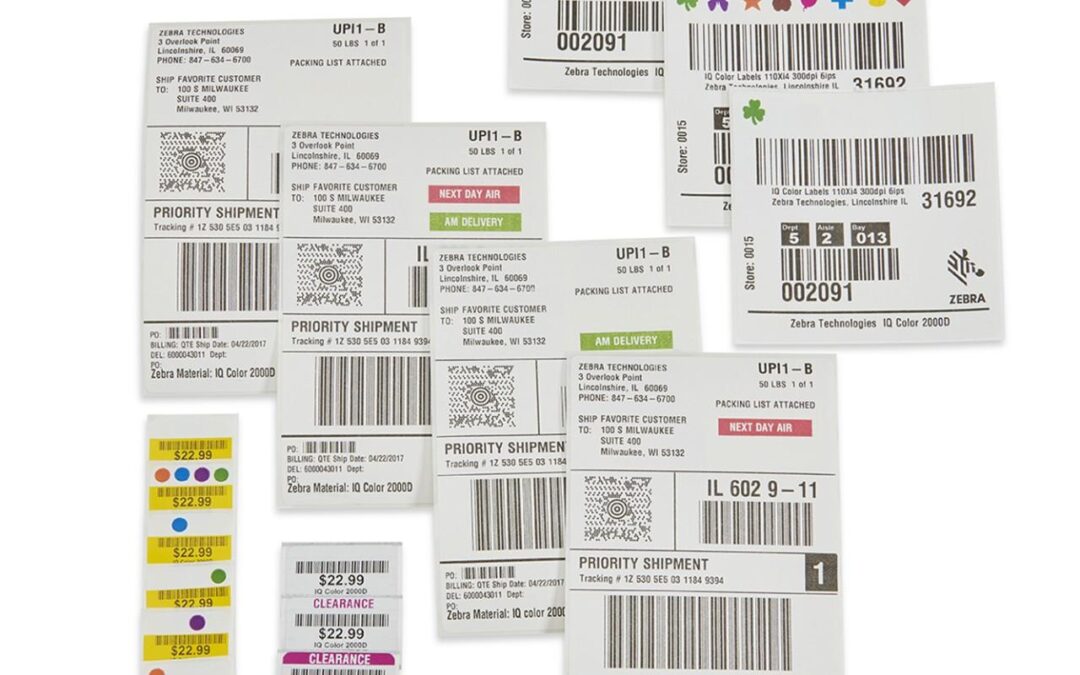
Barcodes have shaped the way industries track, ship, store, and manage products for roughly half a century. What began as a simple linear code used at supermarkets for inventory management and checkouts has evolved into a powerful data-dense tool now used across manufacturing, logistics, retail, healthcare, and beyond. Today, 2D barcodes, like DataMatrix, QR codes, and PDF417, have become the standard and are continually increasing in popularity.
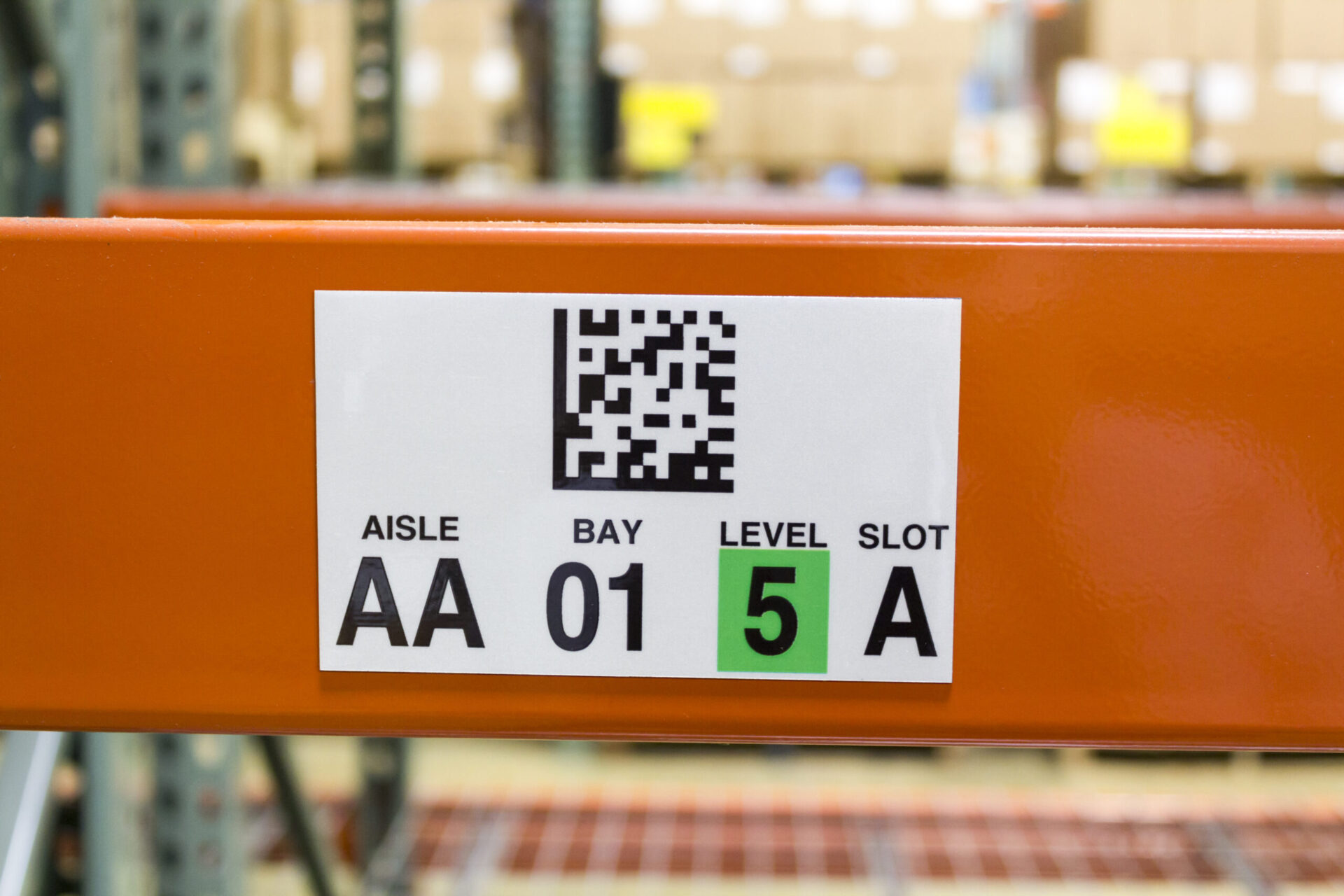
What has been the driving force of the increase in using 2D barcodes? Why are so many organizations upgrading the type of barcodes they use? The technology used to create and scan barcodes has evolved, as well as modern operations and needs.
2D barcodes expand upon the concept of 1D barcodes by incorporating more data into less space with greater integrity and security.
From 1D to 2D: A Natural Evolution of Data Needs
Traditional 1D barcodes (like UPCs) have been around since the 1970s. They’re simple, familiar, and easy to produce, but they’re limited in space. A 1D barcode can store only about 20–25 characters, and the more data you need, the longer the code becomes. In today’s world of complex supply chains and growing labeling requirements, many companies are simply running out of label real estate.
The introduction of the 2D barcode in the late 1980s was a turning point. With the ability to store hundreds, even thousands, of characters in a tiny footprint, 2D codes opened new possibilities for efficiency, accuracy, and traceability. If a 1D barcode is like a sentence stretched into one line, a 2D barcode is like an entire paragraph packed neatly into a small square.
The increasing use of 2D barcodes didn’t happen overnight, but in today’s fast-paced logistics and manufacturing environment, the benefits are too significant to ignore.
2D Barcodes Are Quickly Becoming the New Standard
2D barcodes expand upon the concept of 1D barcodes by incorporating more data into less space with greater integrity and security. Scannability and reliability have improved operational efficiency, and barcode technology has been evolving to keep up with demands. And with the increasing use of RFID, 2D barcodes can be used in conjunction with RFID for greater verification.

Higher Data Density in Less Space

2D barcodes can hold an enormous amount of data, as much as 2,000 characters, in the same amount of space as a 1D barcode. This is especially crucial as more industries require detailed traceability, serialized items, or regulatory compliance labeling. This means the 2D barcode can have a higher data density in a smaller space, with the ability to encode:
- Lot numbers
- Serial numbers
- Manufacturing dates
- URLs
- Images or binary data
- Full manifests or bills of lading (PDF417)
Greater Data Integrity and Security
2D barcodes don’t just hold more data, they hold smart data. Their complex structure and advanced encoding make them significantly harder to counterfeit, an essential benefit for industries such as:
- Pharmaceuticals
- Medical devices
- Automotive manufacturing
- High-value electronics

For example, a blister pack of medication often includes a 2D DataMatrix code used for authentication. Retailers, distributors, and healthcare providers can scan the code to verify product legitimacy instantly.
Enhanced Scannability and Read Reliability
Forget carefully aligning a handheld scanner with a 1D barcode. 2D barcodes can be scanned from virtually any direction or orientation, improving productivity and efficiency on manufacturing lines, in distribution centers, and in field operations.
Modern imagers can read damaged or partially obscured codes from up to 50 feet away. Small barcodes can be decoded at a high speed and missing information can often be interpreted through error correction. This helps to reduce mis-scans, eliminate bottlenecks on conveyors, and minimize repetitive wrist motions that may cause injury.
Ready for Modern Technology: Printers, Scanners & Software
As 2D barcodes have grown in popularity, supporting technology has evolved with them. While older 1D-only scanners can’t read 2D codes, most organizations upgrading equipment find the benefits far outweigh the investment.
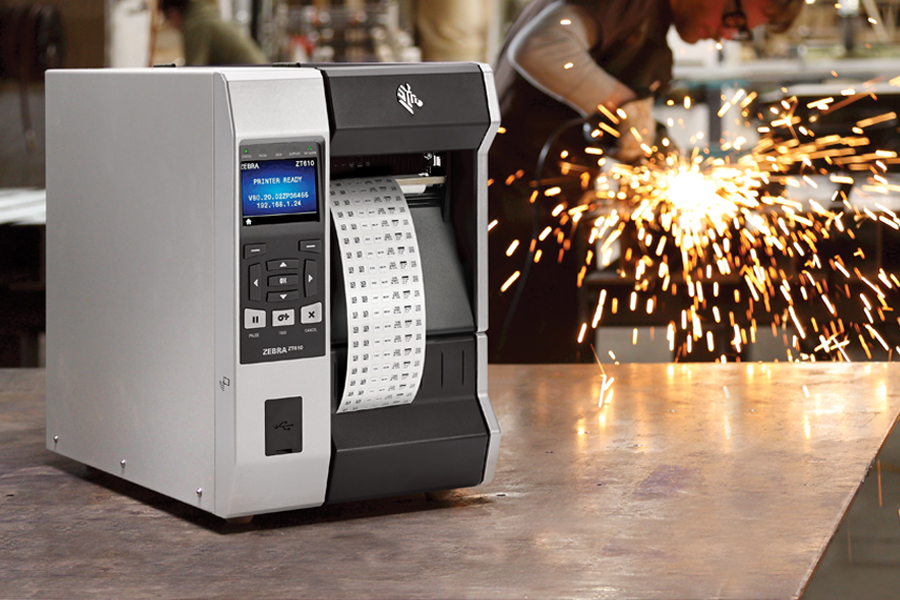
- Printers: Industrial printers now support high-resolution printing for detailed 2D symbologies and come in a range of specialty thermal barcode label printing options, including desktop printers, mobile printers, print-and-apply systems, RFID printers, and card printers.
- Scanners: Modern imagers can capture 1D and 2D barcode data in real-time, with greater speed and accuracy.
- Software: Label design suites, such as BarTender or NiceLabel, make it easy to generate 2D barcodes for any size business.
Flexibility for RFID Integration
RFID and 2D barcodes often work together. If an RFID tag becomes unreadable, a printed 1D or 2D barcode on the label provides a backup. A 2D barcode is typically a preferred match with RFID because it can hold more data, fit into a smaller space, and can better mirror the encoded RFID information. This hybrid approach ensures accuracy and business continuity, even if one technology fails.
Where 2D Barcodes Are Gaining the Most Traction

While no industry has specifically gone entirely 2D, adoption is rapidly expanding where data complexity and space constraints collide. As labeling demands grow, 2D barcodes offer the flexibility and power needed to handle evolving requirements. The largest users of 2D barcodes include:
- Manufacturing: serialization, traceability, WIP labeling
- Pharmaceutical & Medical: UDI requirements, anti-counterfeiting
- Transportation & Logistics: manifests, shipping documentation, pallet & carton tracking
- Retail: QR codes for marketing, customer engagement, returns automation
The Cost of Waiting to Incorporate 2D Barcodes
With modern scanning and printing technology more accessible than ever, switching to 2D barcodes is no longer a futuristic upgrade, it’s a practical move that can save money and reduce operational headaches. Companies delaying the move to 2D labeling often face chargebacks due to unreadable or non-compliant labels, slower warehouse throughput and higher labor costs from re-scans and mis-scans.
Are You Ready to Evolve Your Barcode Strategy?
2D barcodes aren’t just a trend, they’re the natural next step in efficient, high-accuracy labeling. With stronger data capabilities, better scanning performance, and enhanced security, they’re helping organizations modernize operations and stay competitive.
With more than 35 years of experience in labeling technology, Imprint understands every component of a successful 2D barcode transition, from label materials to printing hardware, scanning equipment, encoding requirements, and software integration. The specialists at Imprint can help you evaluate your current labeling landscape to ensure that your facility gets matched with the best technology and software you need.
Whether you’re upgrading from 1D to 2D, introducing serialization, or developing a new labeling standard, Imprint delivers the expertise and solutions needed to help make your business successful. Our specialists can help you design a smarter, more efficient labeling system built for the future of your supply chain.
Contact Imprint Enterprises today to upgrade your facility with the latest barcode technology.